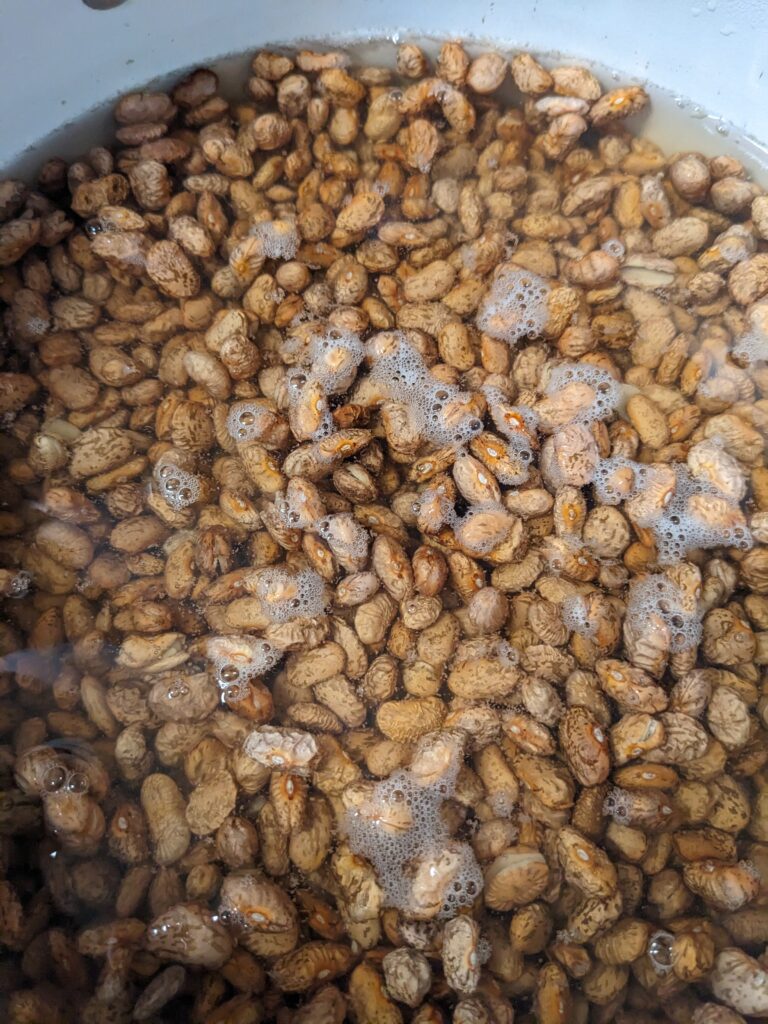
We have a 25-pound (11.3 kg) bag of pinto beans that we have been working through. I have fallen out of practice with cooking, so today, I gave it a shot. Here is the recipe I tried. (I didn’t measure anything, so you are on your own with that.)
- Several mug fulls of beans (regular coffee mug size) in a pot
- Cover with water including an extra inch at the top (at least)
- Start to boil
- Heap of salt on a spoon (a regular spoon that you eat with)
- celery seeds
- mustard seeds
- ground cumin
- lime juice
- one sliced onion
Start the beans heating right away to boil while you add the other ingredients. (Skim off any floating twigs when you first add the water.) Stir from time to time and add a bit more water, more towards the beginning, as it is soaked up by the beans.
There is no presoak; I added salt toward the beginning and cooked with the cover on. (People argue about these things in terms of the best way to cook dried beans.)
You can feel the beans slowly soften over time as you stir them. Dried beans are way better overcooked than undercooked. Make sure they are cooked long enough to denature most of the lectin (PHA, phytohemagglutinin; it doesn’t take that long; a good boil for 20 minutes will work). Actually, is it possible to overcook beans? I cooked these for two hours and 20 minutes at a good boil. They were very plain; there was so much volume of beans it seemed to just absorb the spice (or maybe I should have added them later in the process to preserve the flavor from boiling off?—now that I think about it, I will try this next time), so I added a giant spoonful of minced garlic and cooked them a little more.
Pinto beans come from the Spanish word for spotted. The common bean, Phaseolus vulgaris, is from the Americas, first domesticated in Mesoamerica. Along with corn, potatoes, tomatoes, squash, sunflowers, and chili peppers (among other crops), they didn’t exist in Eurasia, Africa, or Australia until after the Columbian exchange. Today we tend to think of these crops as being a traditional part of European cuisine. Just imagine Italian food without tomato sauce or zucchini; Ireland and Germany without potatoes; Ukraine without their national flower, the sunflower (or south and southeast Asian food without spicy hot peppers). It’s interesting to think about what Europeans ate before this time. (They did have fava beans and chickpeas (both from Asia), and cowpeas (from Africa).)
Thoughts: I was debating whether to add black pepper or not; if I had one, dropping in a jalapeño would probably be good; maybe some flaxseed? I also wonder how a little bit of honey added to the cooking beans would work. However, that seems like more of a baked bean recipe.
Links
- Epicurious article on testing different ways to cook dried beans, https://www.epicurious.com/expert-advice/soaking-salting-dried-bean-myths-article
- Wikipedia article on the PHA lectin found in beans, https://en.wikipedia.org/wiki/Phytohaemagglutinin
- Thompson, L. U., Rea, R. L., & Jenkins, D. J. (1983). Effect of heat processing on hemagglutinin activity in red kidney beans. Journal of Food Science, 48(1), 235-236. https://doi.org/10.1111/j.1365-2621.1983.tb14831.x
- Wikipedia article on beans, https://en.wikipedia.org/wiki/Bean
- Wikipedia article on the Columbian Exchange, https://en.wikipedia.org/wiki/Columbian_exchange
Leave a Reply